The guerrilla strategy for academic job searching
The cold-email strategy that bypasses the queue.
Following up on my previous posts about staying or leaving the current PhD role: Now, you've decided to leave—or you're a fresh student trying to find a position. You know the reality in the current job market. My previous post from Prof. Malmberg showed 292 applicants for one PhD position. A 0.3% success rate.
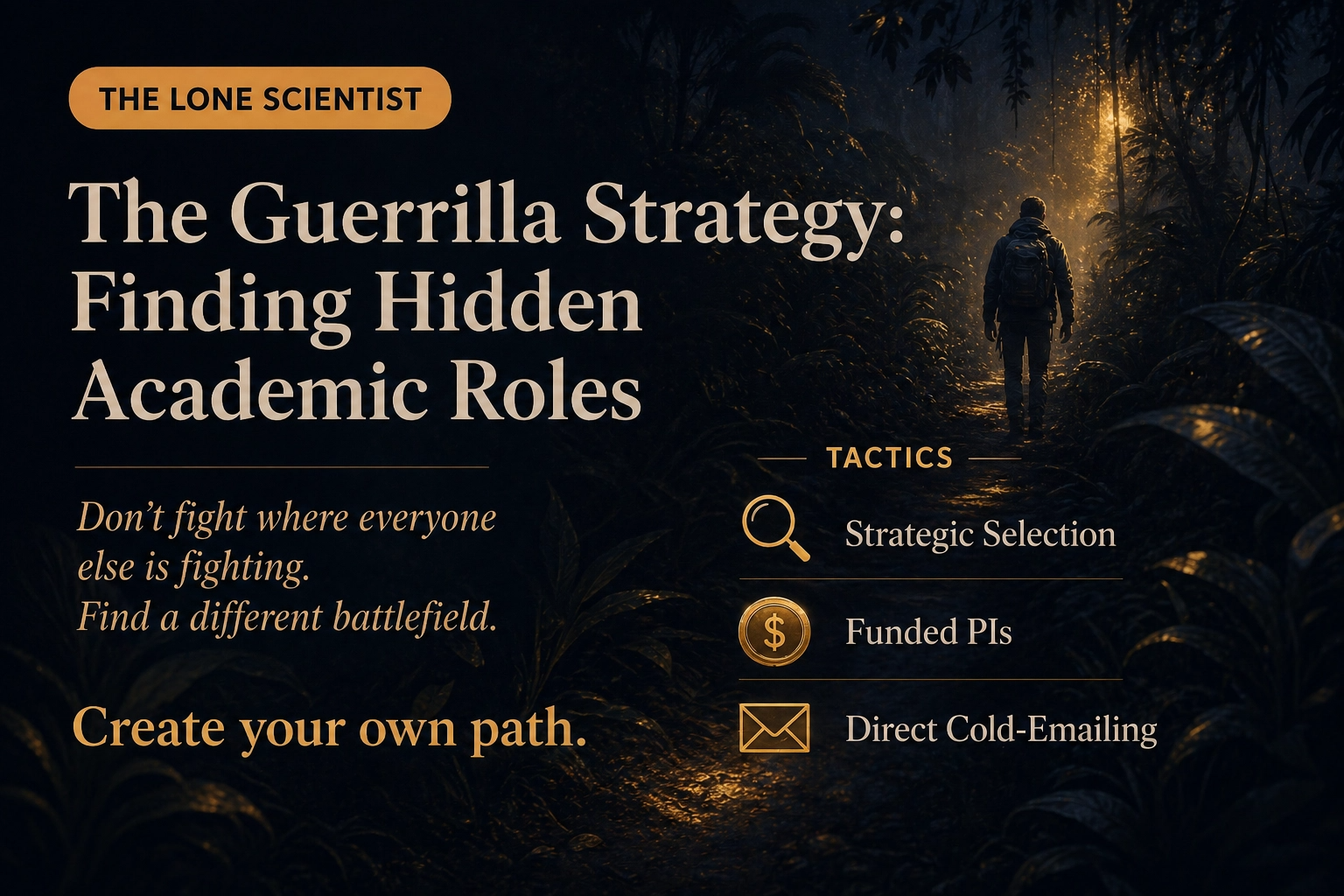
I'm from Vietnam. If you know about the Vietnam War, you know guerrilla warfare was our strategy against a much larger force. Don't fight where everyone else is fighting. Find a different battlefield.
In academic job searching, that means: don't just apply to advertised positions. You need an alternative strategy as well.
Cold-email PIs with funded projects. Here's why this works: When a position is advertised, you're competing with hundreds. When you cold-email a well-funded PI before they advertise, you're having a conversation. The competition is much smaller.
But you need to do it strategically:
First, know what you want. Which subject? Which methods? Which city or country? Generic emails to 100 PIs won't work. Specific emails to 10 well-chosen labs will.
Second, find PIs with generous funding. They have resources. They can create positions even when nothing is officially advertised.
Third, understand what you're looking for. PhD positions usually mean 3-4 years secured. Postdoc positions can be just 1-2 years, which means starting a project only to stop and search again soon. Finding a lab with stable, long-term funding matters.
The guerrilla approach: Don't fight the advertised position battle where hundreds or thousands of people are competing. Find the opportunities before they're posted. Create your own path.
In my next post, I'll show you how to use AI to identify well-funded PIs systematically. It's easier than you think.
Have you tried cold emailing? What worked for you?
To find PIs with real hiring capacity, use the DFG Finder — filter by subject area, sort by active grant count.
Newsletter
Get the next post in your inbox
New posts on DFG funding, academic careers, and research strategy — once or twice a month.